
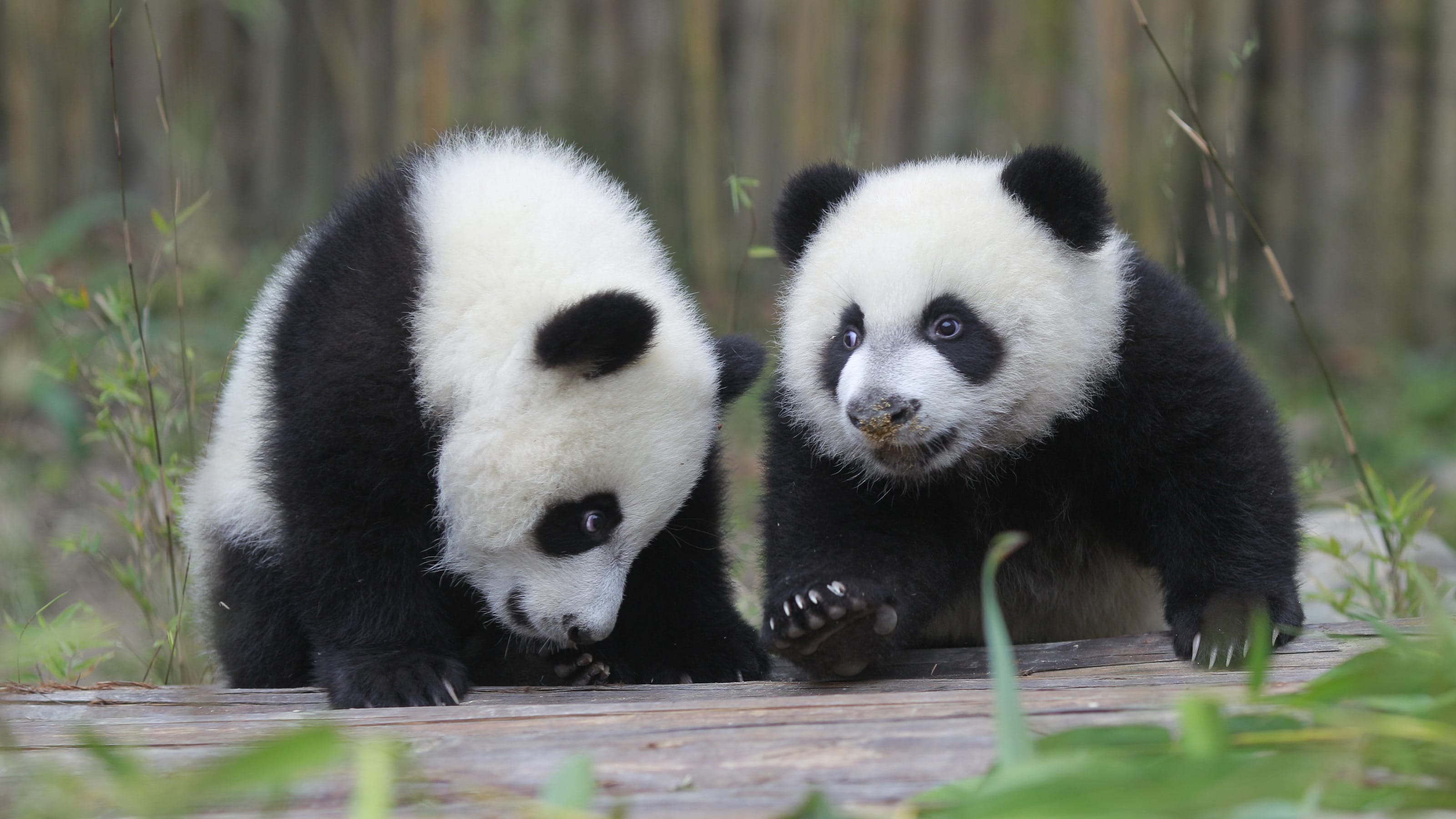
You don’t need an excuse to celebrate the world’s cutest animals. Still, sometimes it can be worth drawing attention to them – especially if they are at risk of being endangered or are on endangered species lists. This added attention could be what the species needs to rebound and grow its numbers again.
That’s certainly the case with giant pandas, which were classified as endangered and have since been downgraded to “vulnerable.” This is just one of many interesting facts about pandas that you may not be aware of, and there’s no better day to appreciate the species than National Panda Day, which takes place on March 16. You can honor the species and the day by brushing up on your panda knowledge, starting with these ten things you may not know about them.
No Longer an Endangered Species

As mentioned above, the giant panda was added to the endangered species list in 1990 after its numbers had steadily declined. At that time, the International Union for the Conservation of Nature (IUCN) estimated that there were only 1,114 giant pandas left in the world. Once designated endangered, some were put into captive breeding programs, panda habitat became protected and restored, and 50 giant panda reserves were created in China.
All of this work helped to downgrade their status to “vulnerable.” That doesn’t mean the giant panda is thriving, but it does mean the years of decline have ended, and instead, numbers are increasing. The IUCN now estimates there are 2,060 giant pandas in the world.
Eating Could Be Considered Their Favorite Thing To Do
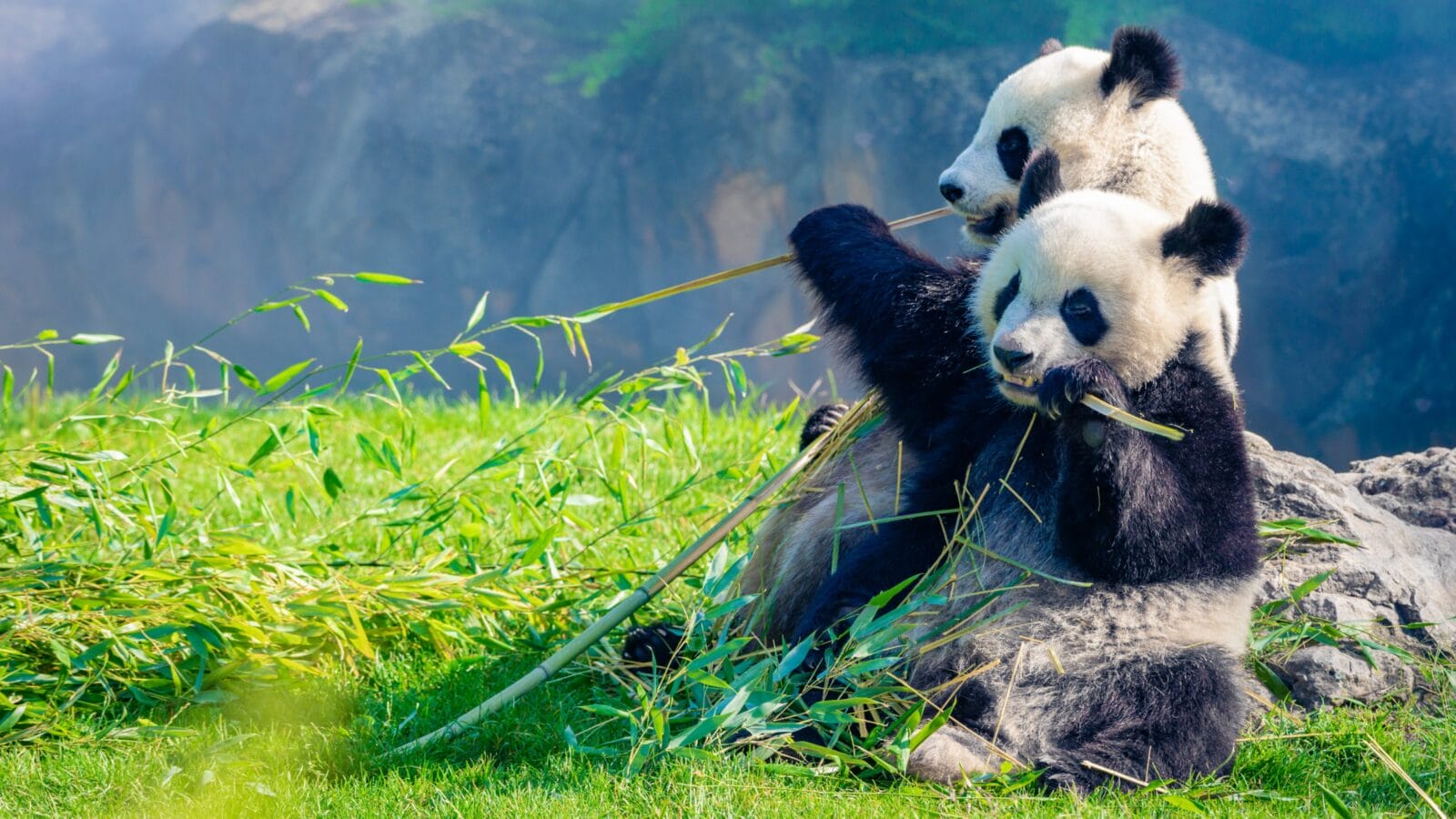
If you’re curious about how pandas spend their day, the simple answer is eating. Pandas love to eat, and this is their favorite hobby. They spend about 12 hours a day eating. Their main source of nutrition is bamboo, but that’s not the only food they eat.
Because their digestive systems are classified as carnivores, pandas can digest small animals, eggs, and carrion. This is thought to make up about 1% of their diet. To ensure they don’t starve, pandas need to eat at least a couple of different bamboo species, including the shoots, roots, leaves, and stems.
Because they eat so fast and so much, only about 1/5 of it is digested. They need to eat a whopping 15% of their body weight daily. It should come as no surprise that they need to “use the bathroom” quite often since they are eating so much. They typically have bowel movements up to 40 times a day, which is rather shocking. That’s almost two bowel movements per hour!
The Shape of Their Teeth Allows Them to Easily Eat Bamboo

If you’ve ever seen or touched bamboo, you know how thick and strong it can be. Therefore, it makes sense that the panda’s molars are flat and broad so they can better crush the bamboo. Another cool fact is that they have a large wrist bone that looks and acts like a thumb. This makes it easy for them to hold the bamboo while eating.
The Color of Their Fur Acts as Camouflage
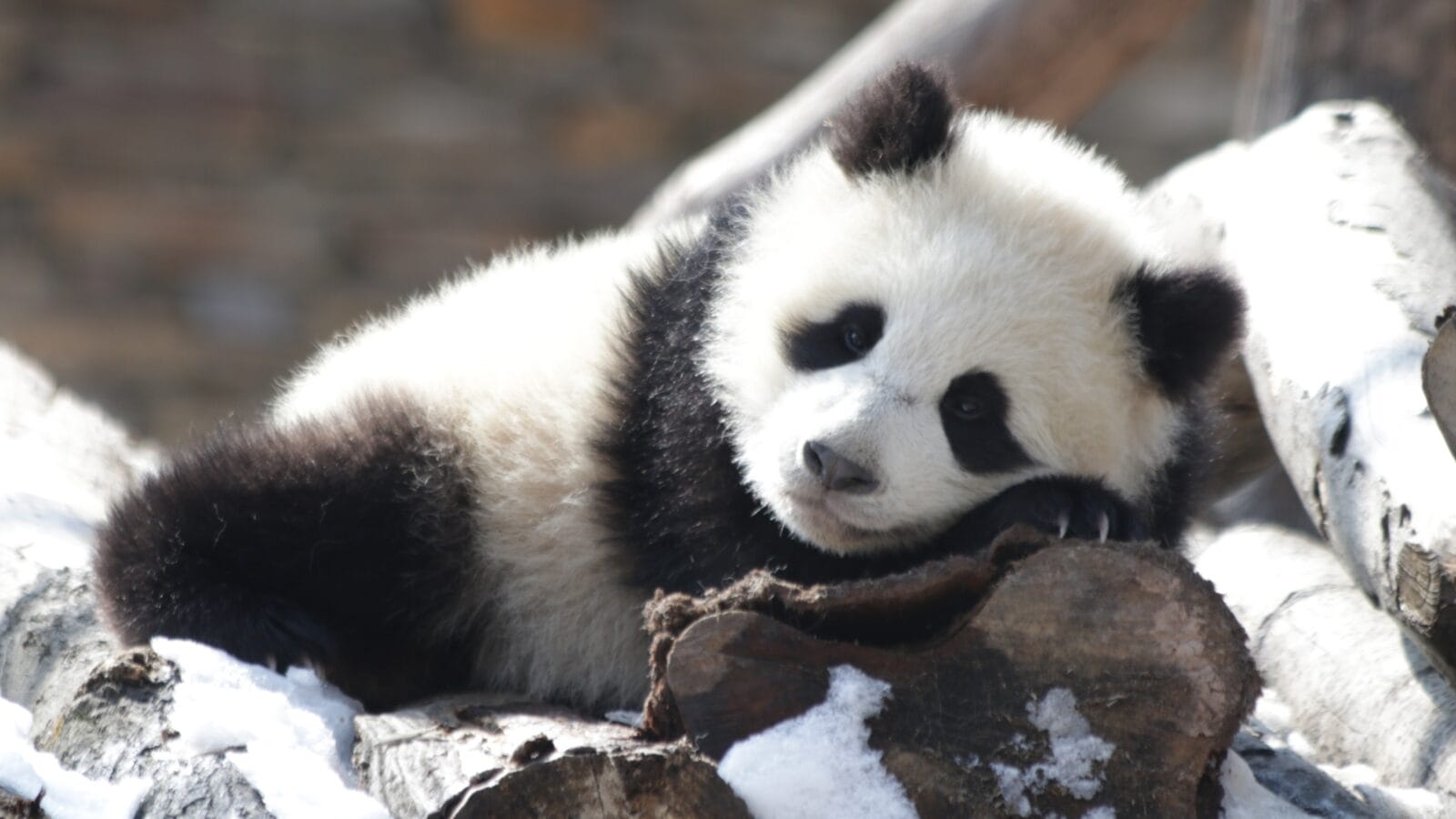
Upon first glance, you may think the color of a giant panda is incredibly cute and unique, but did you know that these markings work as camouflage? When living in a snowy habitat, they can blend into the environment perfectly. Also, their dark legs and arms are meant to help them camouflage in the shade.
Known As a Gentle Giant
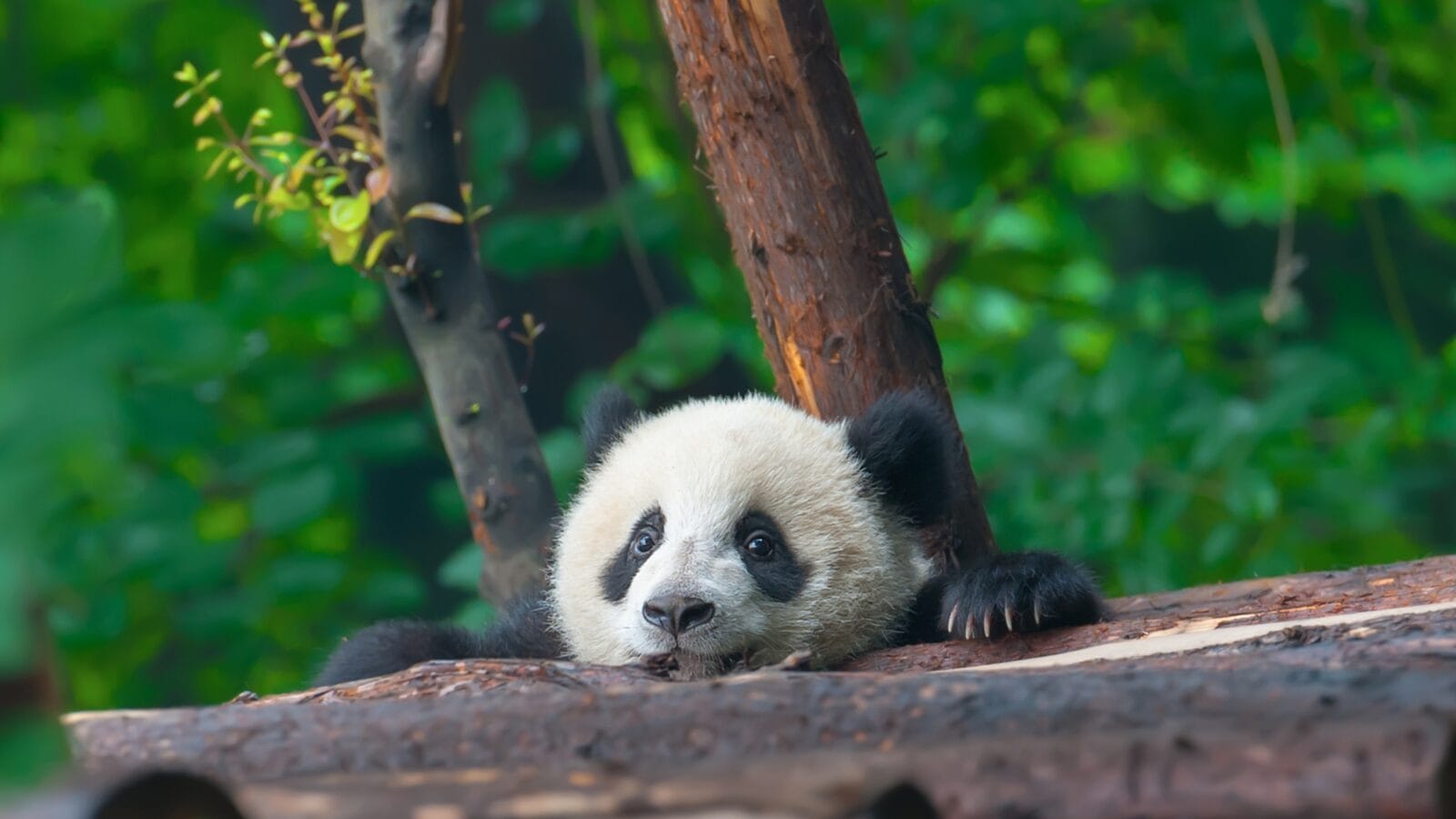
Even though the giant panda is huge, and is technically a carnivore, it is deemed as one of the gentlest bear species. It adheres to a mostly herbivore diet and doesn’t often show violent behavior.
You Don’t Have to Worry About Encountering a Giant Panda
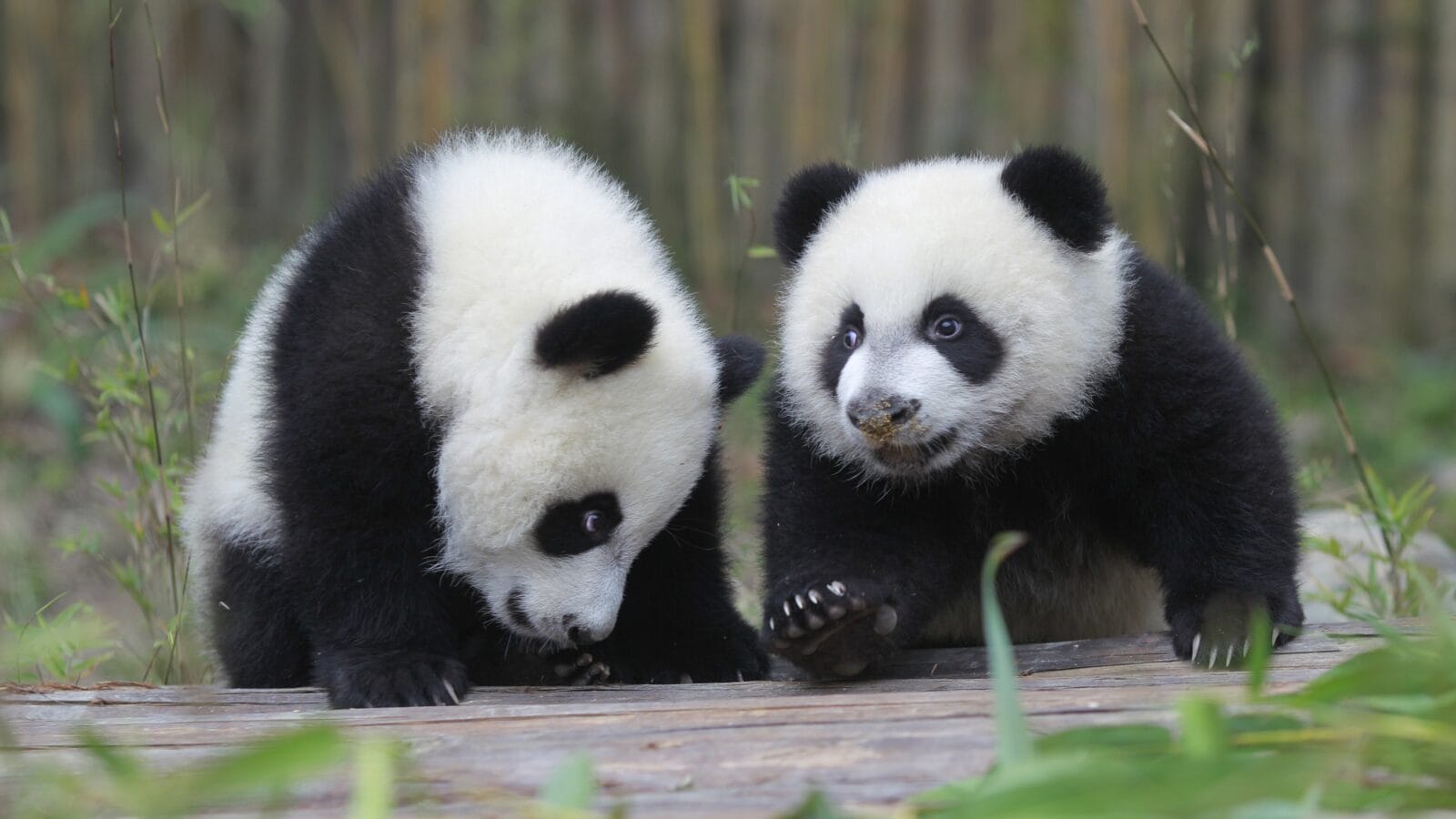
Your odds of bumping into a giant panda in the wild are almost zero percent. Giant pandas are shy and don’t like a lot of noise, so they don’t frequent areas where humans are. They keep very much to themselves.
Pandas are Excellent Climbers and Swimmers
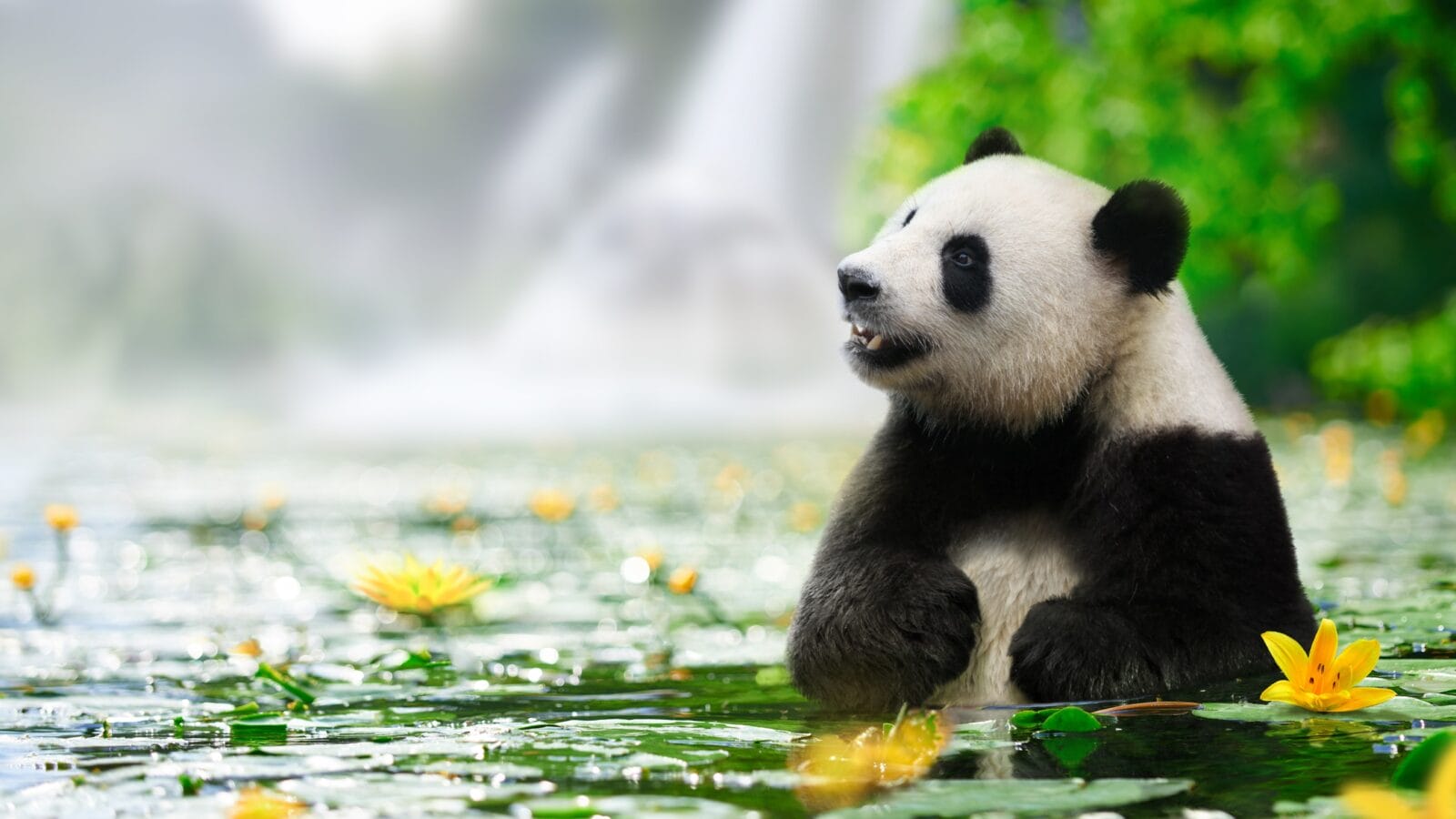
Despite their massive size, giant pandas are also excellent climbers. They can scale a tree in no time and with incredible grace. Pandas are agile and strong, both of which are needed to excel at climbing. Pandas also learn to climb at a very young age. By just five months old, pandas are already practicing and learning the skills from their mom. In terms of how high they can climb, it’s as high as 13,000 feet.
Once again, they have mastered swimming. Giant pandas are known to be very “comfortable” in the water and display impressive skills.
They May Not Be as Big as You Think
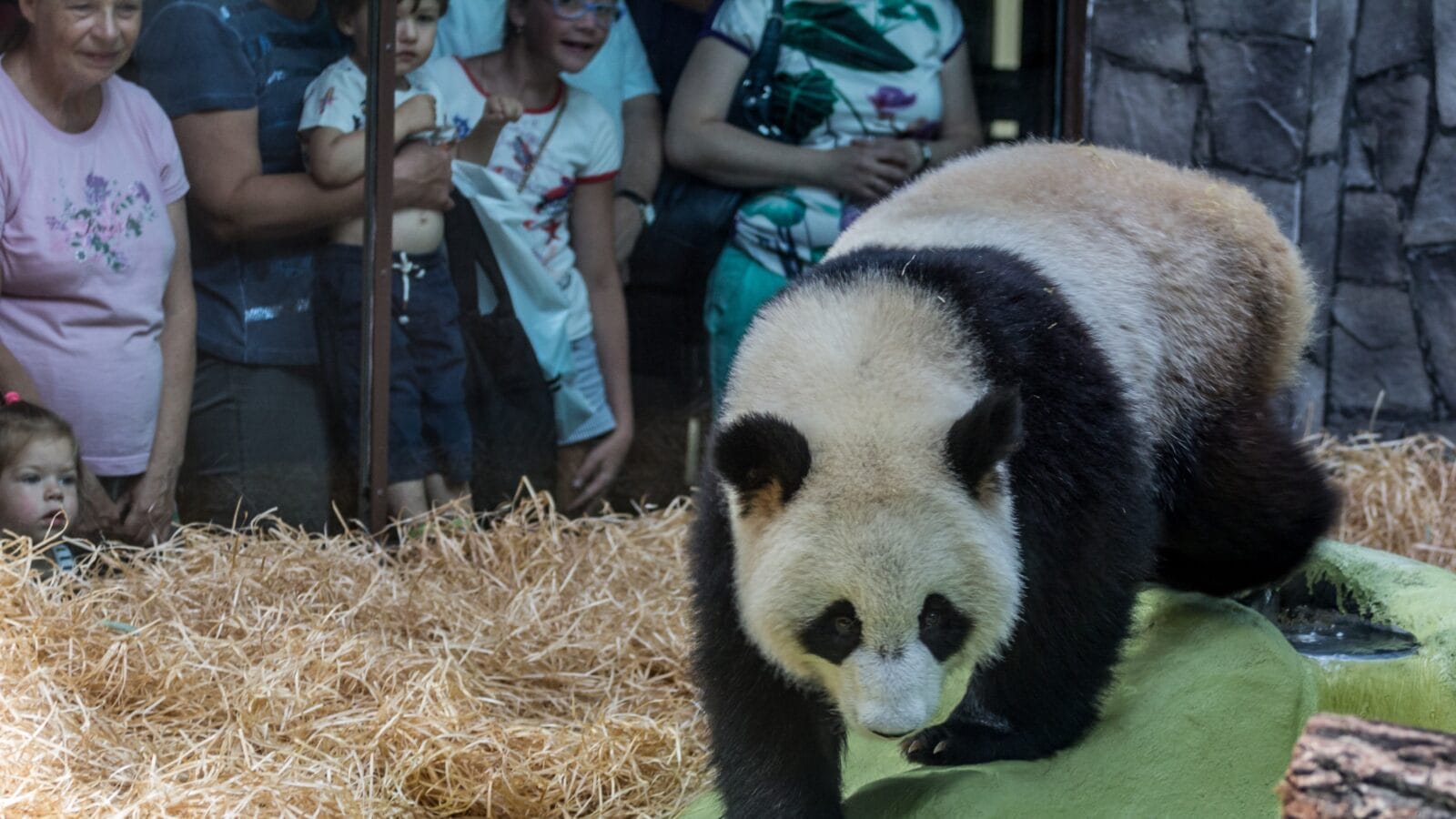
Despite being called a “giant panda”, they may not be quite as big as you thought. The average size is four to five feet, and the average weight is 300 lbs. By comparison, an adult polar bear can weigh up to 1,500 pounds and can be up to 10 feet in length. The lifespan of a giant panda is also pretty long – averaging about 20 years. Giant pandas are native to China.
The Red Panda is the Only Other Type of Panda
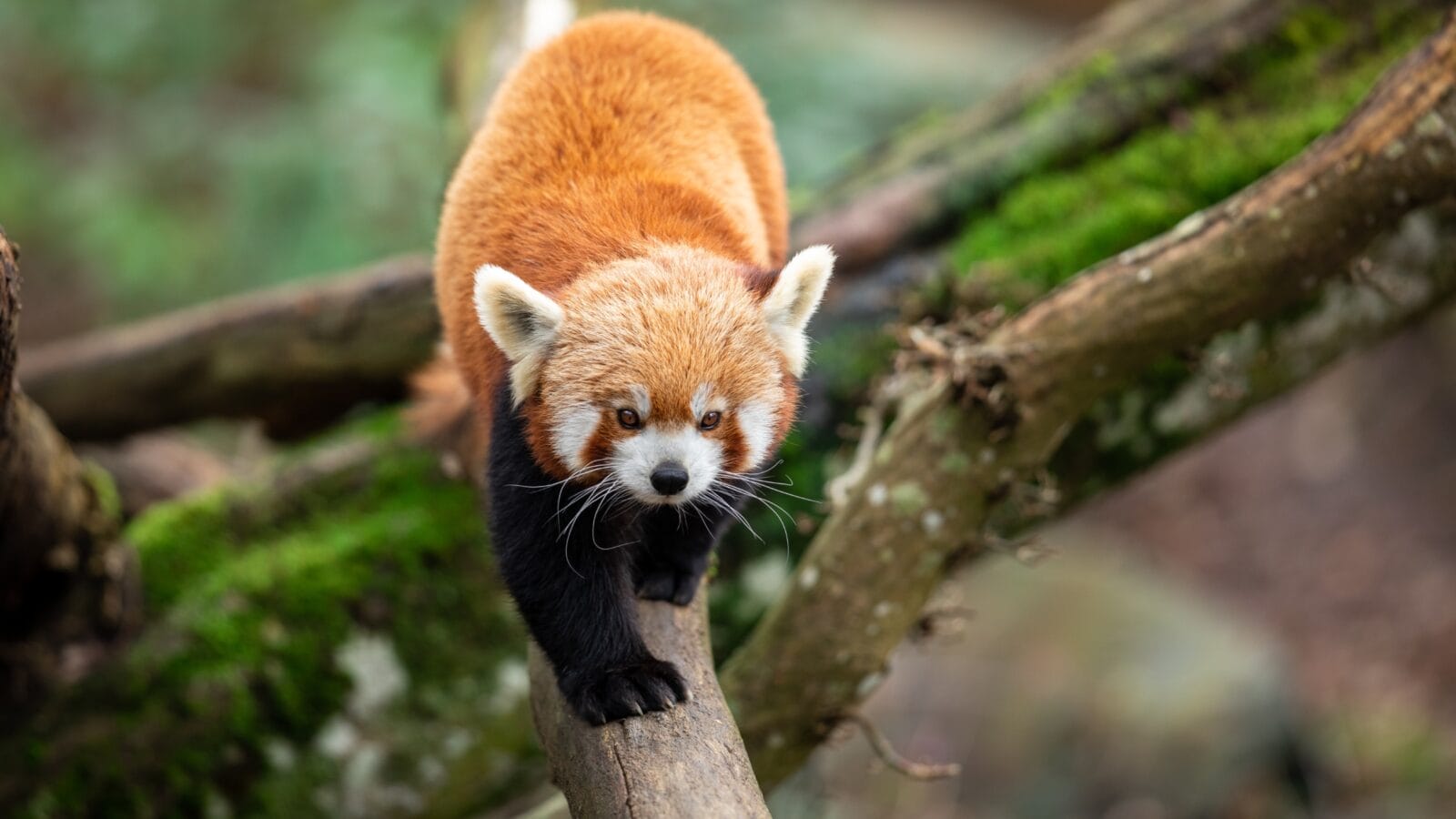
While we have covered a lot of facts about the giant panda, there is one other type of panda and that’s the red panda. The red panda is much smaller and looks like a cross between a fox and a cat. The red panda is typically 24 inches in length and weighs just 13 lbs. This means it’s not far off in size from a housecat. A unique feature is their bushy long tails. Sure, their tail is cute but it is functional in that it’s used to keep them warm when sleeping.
The red panda can be found in Bhutan, Nepal, China, and northern India. It prefers to reside in the mountains or thick coniferous forests. Like the giant panda, the red panda loves bamboo and eats grass, mushrooms, berries, and acorns.
There Is a Sub-Species to the Giant Panda
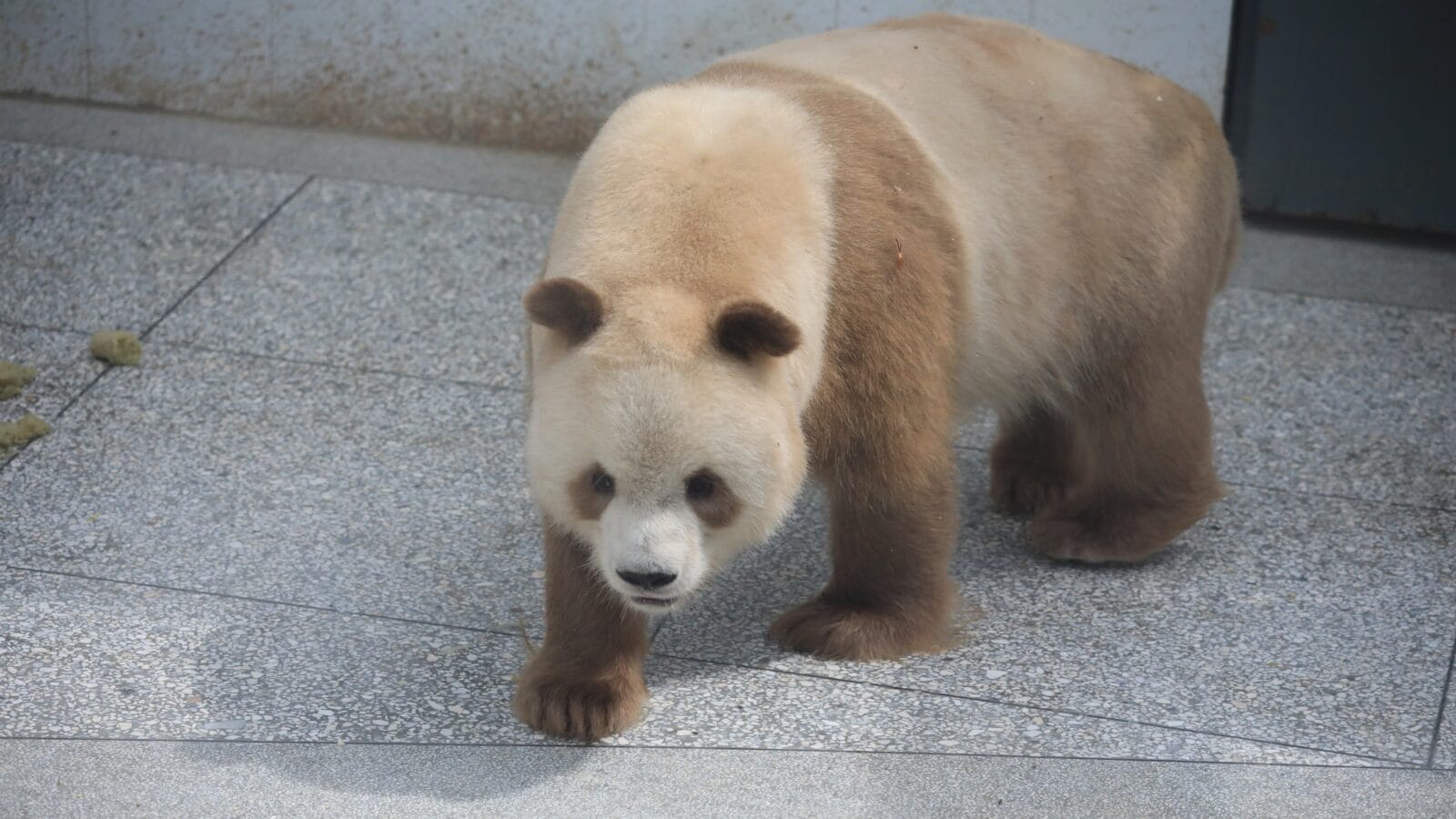
While technically not another species of panda, the giant panda does have a sub-species called the Qinling panda. It’s not typically as big as the giant panda, but it’s extremely close. The Qinling panda was first discovered in the 1960s, but it took until 2005 to be officially recognized as a sub-species.
What sets this one apart is its color. Unlike the giant panda, this one is a brown bear with both dark and light brown markings. These bears are so uncommon that back in 2001, it was estimated that only 100 existed in the wild. Today it is estimated that 200-300 are living in the wild, which still makes them extremely rare.